Choosing a kitchen style is one of the most significant design decisions you will make for your home. Get it right and your kitchen will feel like a natural extension of the property, somewhere that works hard every day and still looks beautiful doing it. Get it wrong and no amount of expensive worktop or clever storage will fully compensate.
The three styles that come up most frequently in our conversations with clients at Jones Britain are in-frame, Shaker, and handleless. Each has a distinct character, different practical considerations, and suits different types of property and lifestyle. This guide breaks them down clearly so you can approach your design consultation with a clearer sense of direction.
In-Frame Kitchens: Traditional Craftsmanship, Exceptional Quality
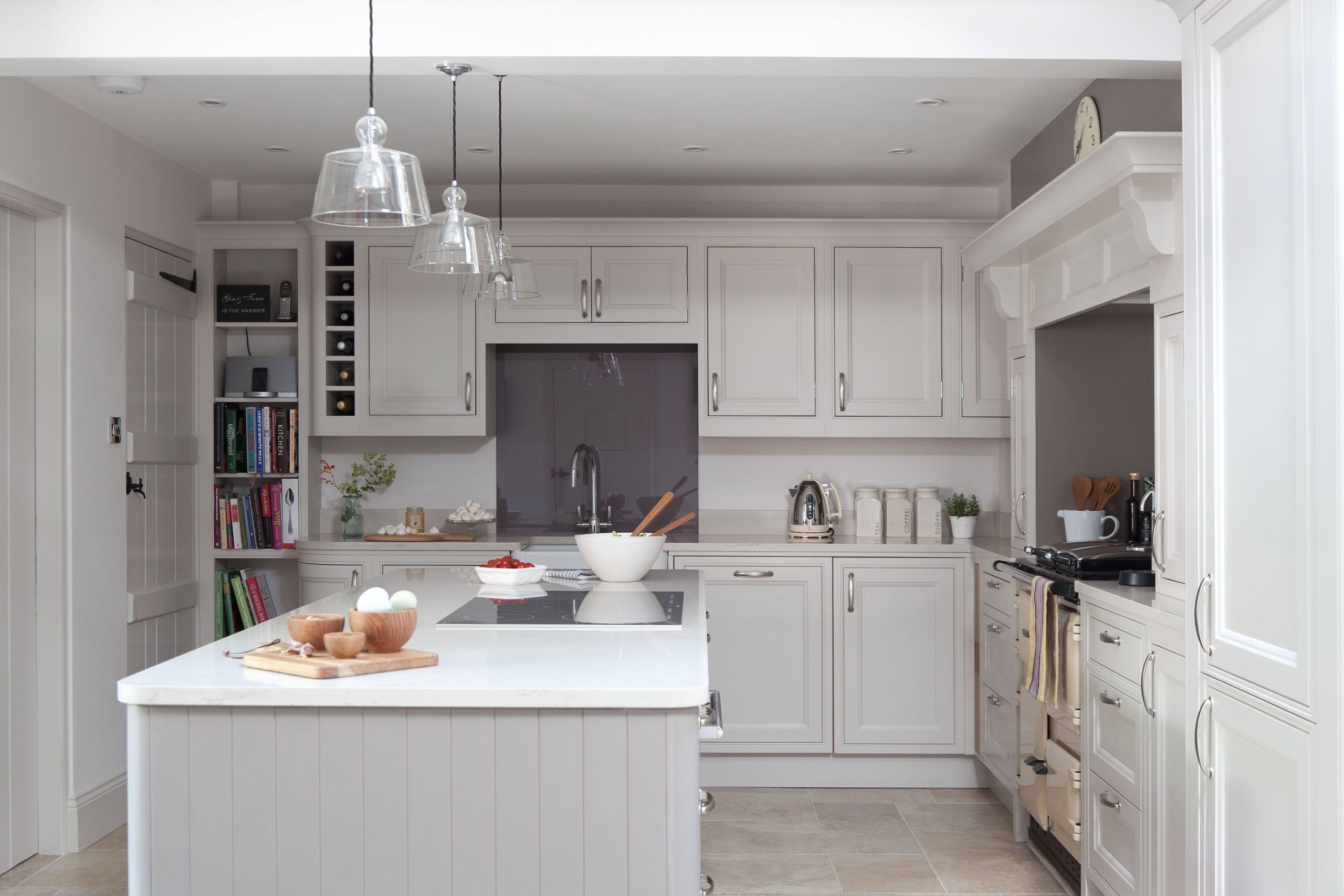
An in-frame kitchen is defined by its construction. Rather than doors and drawers being applied to the front of a carcass, an in-frame kitchen has a solid frame built around each cabinet opening, with the door sitting within that frame. This is the way furniture and cabinetry was made before modern flat-pack construction, and it results in a kitchen that is noticeably more robust, more refined, and more furniture-like in its appearance.
The frame itself is visible around each door and drawer front, creating a distinctive grid-like look that is deeply traditional in its feel. In-frame kitchens work particularly well in period properties: Victorian, Edwardian, and Georgian homes where the kitchen needs to feel consistent with the architecture of the rest of the house. They also suit country houses, farmhouses, and rural properties where a sense of permanence and quality is important.
Because the frame is an integral structural element rather than a decorative addition, in-frame kitchens take longer to make and require more skilled craftsmanship. This is reflected in the cost, but also in the longevity. A well-made in-frame kitchen can last for decades without showing its age.
Shaker Kitchens: Versatile, Timeless, And Endlessly Adaptable
Shaker style is perhaps the most versatile kitchen design available. Originating from the Shaker communities of 19th-century America, the style is characterised by its flat recessed panel doors, simple lines, and the absence of unnecessary ornamentation. It is, in the very best sense, functional design at its most refined.
What makes Shaker so appealing is that it works across an enormous range of properties and settings. In a period home, a Shaker kitchen in a warm heritage colour feels entirely appropriate. In a contemporary new build, the same style in a pale grey or off-white can feel clean and modern. The door profile is simple enough to read as understated in almost any context.
Shaker kitchens are also the most forgiving in terms of colour. Because the door profile is relatively neutral, the colour itself becomes the dominant design statement. This gives you freedom to be bold, or to play it safe, without the door style either helping or hindering you.
Handleless Kitchens: Contemporary, Clean, And Practical
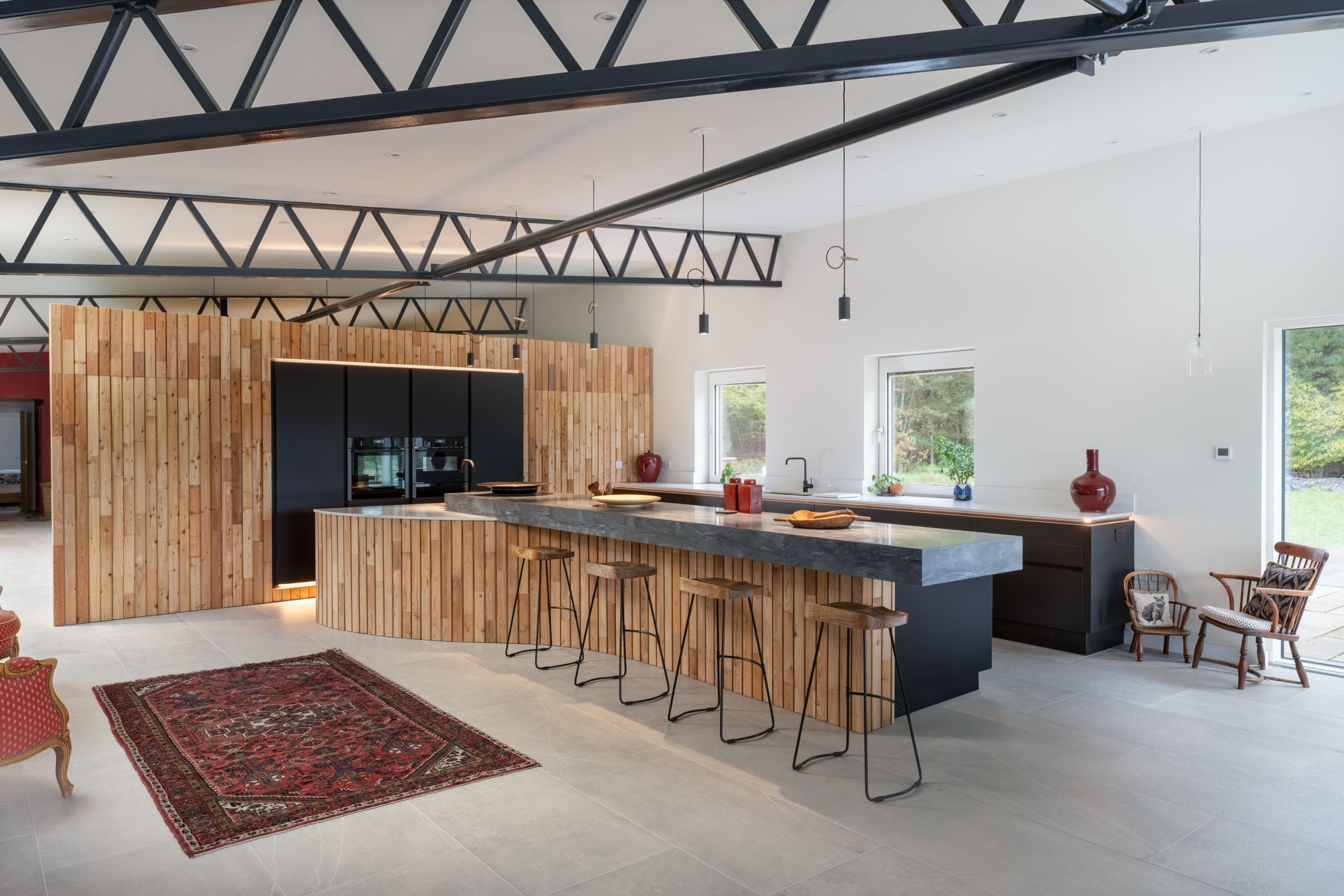
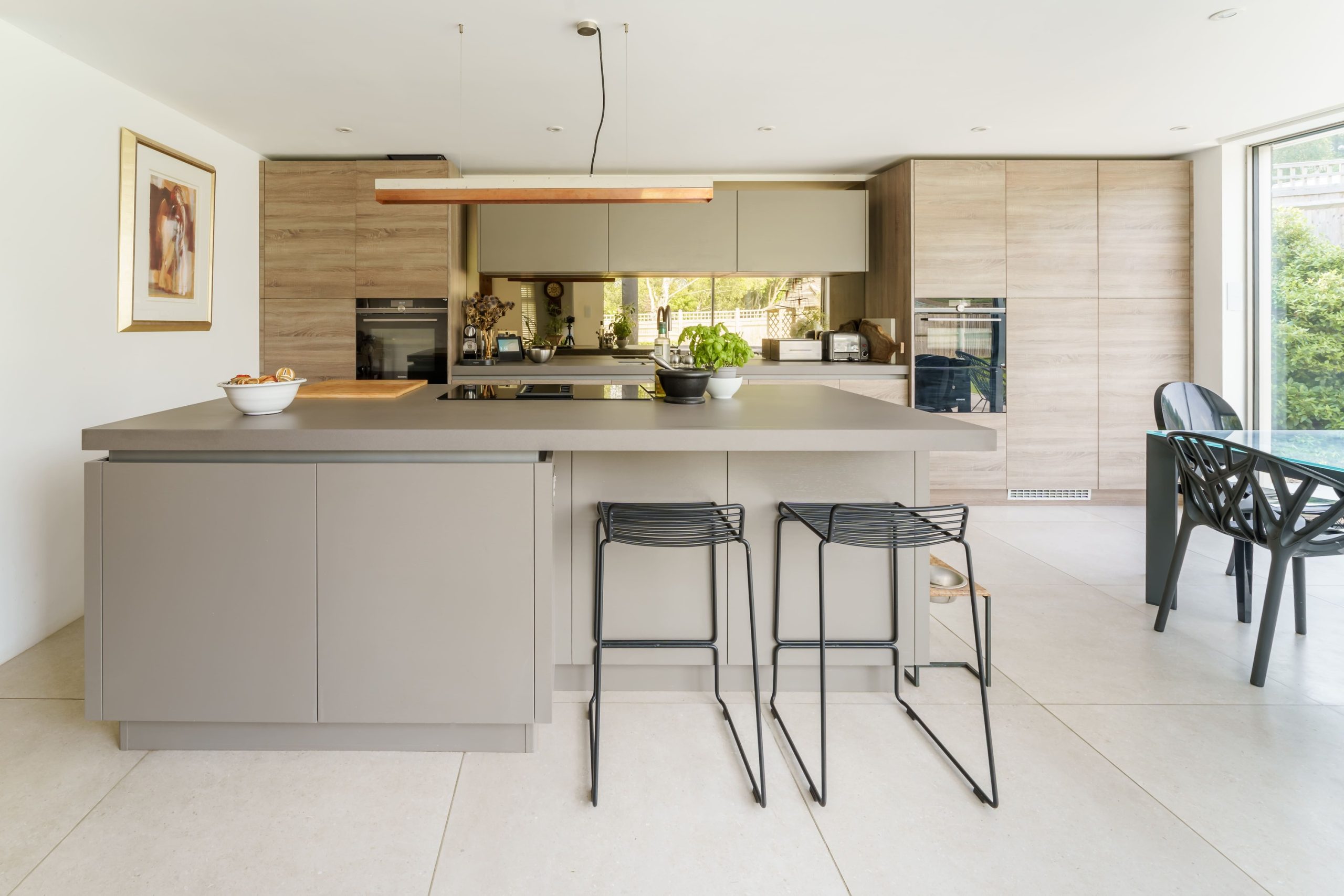
Handleless kitchens represent the other end of the design spectrum. Where in-frame and Shaker kitchens celebrate craftsmanship and joinery detail, handleless design is about eliminating visual noise. There are no projecting handles or knobs. Instead, doors and drawers open via a push mechanism, an integrated grip rail, or a J-pull profile built into the door itself.
The result is a kitchen that feels genuinely contemporary: flat, seamless, and architectural in character. Handleless design works best in modern or recently renovated properties where the kitchen is part of a wider open-plan space. It suits homes where the design language throughout is clean and uncluttered.
From a practical perspective, handleless kitchens are easy to wipe down and keep clean, which makes them popular with families. They can feel less intuitive for young children who are still learning to open doors and drawers, though this is rarely a significant issue in practice.
How To Match Kitchen Style To Your Property
The starting point for choosing a kitchen style should always be the property itself. A Georgian farmhouse and a 1990s new build are not natural homes for the same kitchen, and trying to impose a style that fights against the architecture almost always produces a result that feels slightly off, even if you cannot immediately identify why.
As a general guide: in-frame suits period properties with strong architectural character. Shaker suits almost everything, particularly when the colour choice is calibrated carefully to the home. Handleless suits contemporary properties, open-plan spaces, and homes where a clean, minimal aesthetic is the goal throughout.
That said, rules are there to be considered rather than followed blindly. We have designed kitchens that deliberately create a contrast with the existing architecture, and done well, this can be extraordinary. The key is that the decision is made intentionally, with a clear understanding of the effect being created.
Style Is Only The Beginning
Whichever style you are drawn to, the details matter enormously. Door profile, handle selection, hinge type, internal fittings, worktop material, and colour all interact with each other and with the style of cabinetry to produce the finished result. This is where working with an experienced designer makes a real difference.
At Jones Britain, we take time to understand your home, your lifestyle, and your aesthetic preferences before we start making recommendations. Our process is designed to give you confidence at every stage, from initial concept through to the finished installation. You can read more about how we work on our design process page.
If you are in the early stages of thinking about a new kitchen, our guides on kitchen layouts for period homes and planning a kitchen for everyday family life may also be useful reading.
Visit Our Tunbridge Wells Showroom
Reading about kitchen styles can only take you so far. The real value comes from seeing doors and drawers in person, feeling the weight of the cabinetry, and understanding how different finishes look in natural light. Our Tunbridge Wells showroom gives you the opportunity to do exactly that, with our design team available to answer questions and help you refine your thinking.
When you are ready to begin the process, get in touch to arrange your initial consultation. We serve clients across Kent and the South East and would be glad to help you find the right kitchen for your home.
FAQs
What is the difference between in-frame and Shaker kitchen doors?
An in-frame kitchen has a structural frame built around each cabinet opening, with the door sitting within it. This is a traditional construction method that produces a more furniture-like appearance. A Shaker door, by contrast, is applied to the front of a standard carcass and is defined by its flat recessed panel profile. Both can look excellent, but they have a distinctly different character and suit different types of property.
Are handleless kitchens difficult to keep clean?
Handleless kitchens are generally straightforward to clean. The absence of protruding handles removes one potential dirt trap, and the flat or near-flat door fronts are easy to wipe down. J-pull and grip rail handleless profiles can accumulate grease over time with heavy cooking use, but this is manageable with regular cleaning.
Can I mix kitchen styles in the same space?
Yes, and done well this can produce an extremely interesting result. A common approach is to use a more traditional style for the main cabinetry run and a contrasting style for an island, or to mix open shelving with closed cabinetry. The key is that any mixing is intentional and considered rather than accidental. We are happy to explore this with you during your consultation.
Which kitchen style adds the most value to a property?
A high-quality kitchen adds value regardless of style, provided it is appropriate for the property. In period homes, a well-made in-frame or Shaker kitchen that suits the architecture will tend to be viewed very positively by buyers. In contemporary properties, a clean handleless kitchen often reads as a premium finish. The quality of the cabinetry and the standard of the installation matter as much as the style choice itself.
How do I choose between Shaker and handleless for a modern home?
It largely comes down to the character you want to create. A Shaker kitchen in a contemporary home can feel warmer and more textured, particularly in deeper colours or with natural material worktops. A handleless kitchen will feel cleaner and more architectural. Both work well in modern settings. Our designers are well placed to help you work through the options based on your specific home and preferences.